
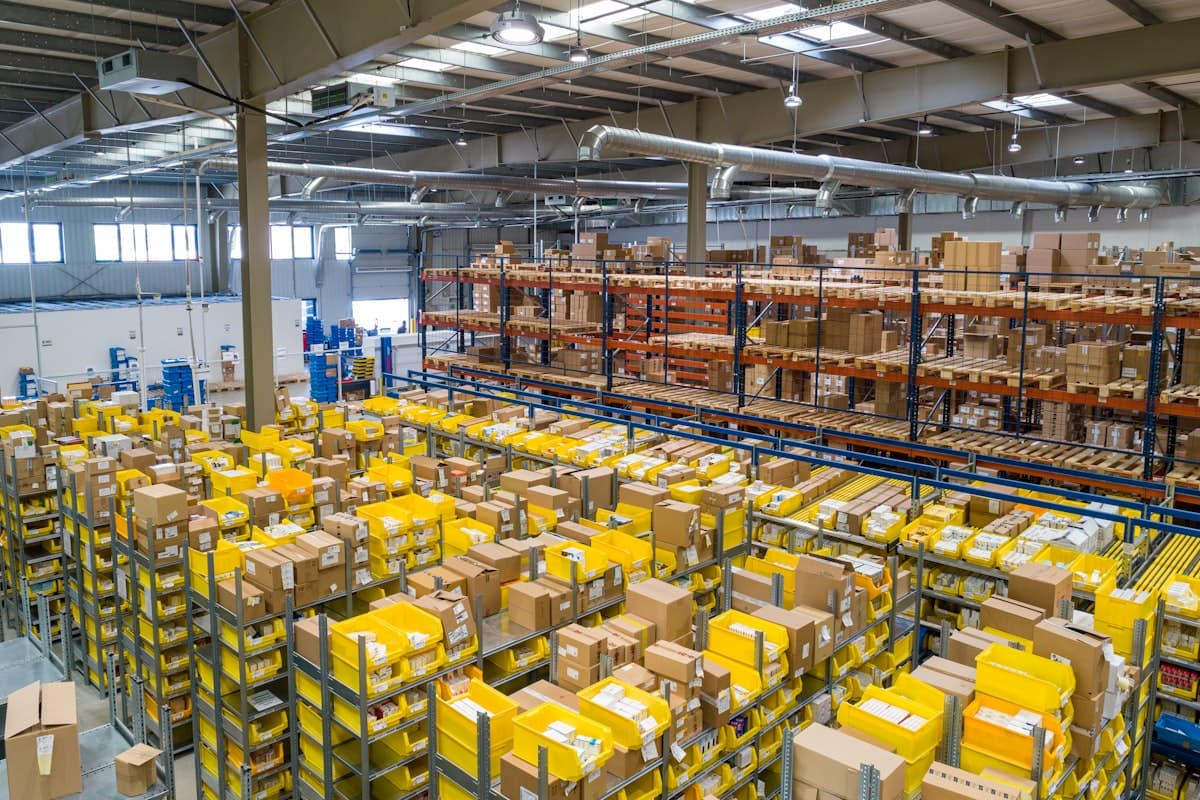
The global packaging automation equipment market reached USD 80.84 billion in 2025, growing at 7.8% annually. Within this market, automated e-commerce packaging systems represent a USD 852.75 million segment expanding at 13.7% CAGR, driven by explosive online retail growth, labor cost pressures, and the operational demands of same-day and next-day delivery fulfillment. Automated carton forming, right-sizing, sealing, and void-fill systems are rapidly replacing manual packing operations in 3PL warehouses, brand fulfillment centers, and omnichannel retail distribution networks.
Market Overview
Packaging automation encompasses machinery for forming, filling, sealing, labeling, and palletizing packaged goods. The e-commerce segment focuses specifically on variable-dimension carton forming, automated box erecting, intelligent void-fill dispensing, and integrated print-and-apply labeling systems. These solutions address the unique challenges of e-commerce fulfillment: high SKU variety, unpredictable order volumes, and the need for sustainable packaging that minimizes dimensional weight shipping costs.
Market Segmentation (2025)
By Equipment Type
- • Carton Forming & Sealing: 34%
- • Case Erecting & Packing: 28%
- • Void-Fill Systems: 16%
- • Labeling & Printing: 14%
- • Integrated Packing Stations: 8%
By End User
- • E-commerce & 3PL: 42%
- • Retail Distribution Centers: 26%
- • Food & Beverage: 14%
- • Pharmaceuticals: 10%
- • Consumer Electronics: 8%
Regional Market Dynamics
North America
The United States leads in packaging automation adoption, driven by Amazon's influence on fulfillment standards, chronic warehouse labor shortages (turnover rates exceeding 100% annually), and rising minimum wages. North American e-commerce fulfillment centers increasingly deploy automated packing cells capable of 600-1,200 packages per hour with minimal human intervention. The region accounts for 38% of global automated e-commerce packaging equipment sales, with particularly strong growth in third-party logistics (3PL) providers serving mid-market brands.
Europe
European markets emphasize sustainability compliance, with packaging automation increasingly integrated with recycled content tracking, waste reduction metrics, and circular economy reporting. Germany, Netherlands, and UK lead in adoption, particularly for right-sizing carton forming systems that reduce cardboard consumption by 20-40% compared to fixed-size packaging. EU Extended Producer Responsibility (EPR) regulations are accelerating investment in automated systems that document packaging material usage for regulatory reporting.
Asia-Pacific
China dominates both equipment manufacturing and end-user adoption, with domestic suppliers (GURKI, Hongming, Xiongying) capturing 60% of regional market share through competitive pricing and local service networks. The Asia-Pacific region is forecast to grow at 16.2% CAGR through 2030, driven by explosive e-commerce growth in India, Southeast Asia, and continued expansion of Alibaba, JD.com, and Shopee fulfillment infrastructure. Japanese and South Korean markets show preference for compact, high-precision systems suited to urban micro-fulfillment centers.
Latin America & Middle East
These emerging markets show growing adoption among large retailers and 3PLs, particularly in Brazil, Mexico, UAE, and Saudi Arabia. Investment is concentrated in turnkey fulfillment centers built to serve regional e-commerce platforms (Mercado Libre, Noon, Namshi). Price sensitivity drives preference for semi-automated and modular systems over fully integrated robotic packing cells.
Technology Solutions and Applications
Automated Carton Forming and Right-Sizing
On-demand carton forming systems create custom-sized boxes for each order, eliminating the need for pre-formed carton inventory and reducing void fill requirements. These systems use corrugated fanfold stock, measure product dimensions via 3D scanning, then cut, fold, and seal boxes in 5-15 seconds. Right-sizing reduces cardboard consumption by 20-35% and lowers dimensional weight shipping charges by up to 25%. Leading systems integrate with warehouse management software (WMS) to optimize packaging decisions across thousands of SKUs.
Intelligent Void-Fill Dispensing
Automated void-fill systems dispense paper cushioning, air pillows, or biodegradable foam based on package dimensions and product fragility profiles. Vision systems verify fill adequacy before sealing, reducing product damage claims while eliminating over-filling waste. Paper-based void fill has surged in adoption (growing 45% year-over-year) as retailers respond to consumer backlash against plastic air pillows and foam peanuts.
Integrated Packing Workstations
All-in-one packing stations combine carton dispensing, automated void-fill, taping, weighing, label printing, and quality verification in operator-assisted cells. These systems achieve 180-250 packages per hour per operator (versus 80-120 for manual packing) while ensuring consistent packaging quality and reducing training requirements. Modular designs allow facilities to scale capacity by adding stations without major infrastructure changes.
System Performance Metrics
- Throughput:
Semi-automated: 180-300 packages/hour; Fully automated: 600-1,200 packages/hour
- Labor Reduction:
50-70% reduction in packing labor hours per package
- Material Savings:
20-40% reduction in corrugate; 30-60% reduction in void fill
- Payback Period:
Typical ROI: 12-24 months for facilities processing 1,000+ packages/day
Primary Market Challenges
1. Capital Investment Requirements
Automated packing systems range from USD 50,000 for entry-level semi-automated stations to USD 500,000+ for fully robotic cells with vision-guided item placement. Mid-market retailers and 3PLs struggle to justify investment without achieving 1,500+ packages per day throughput. Integration costs, facility modifications, and WMS software customization can add 30-50% to equipment purchase price.
2. SKU Variety and Product Diversity
Retailers with highly diverse product catalogs (apparel, electronics, home goods) face challenges configuring automated systems to handle varying product dimensions, weights, and fragility requirements. Automated systems excel with standardized products but require significant programming and testing to accommodate irregularly shaped items, soft goods, and fragile merchandise.
3. Integration Complexity
Packaging automation must integrate with warehouse management systems, order management platforms, shipping software, and conveyor control systems. Data exchange protocols, API customization, and exception handling workflows require substantial IT resources. Legacy WMS platforms often lack native support for automated packaging equipment, necessitating middleware development.
4. Maintenance and Downtime
Automated equipment introduces single-point-of-failure risk in fulfillment operations. Mechanical breakdowns, sensor malfunctions, or software errors can halt packing operations. Facilities require backup manual packing capacity and on-site maintenance expertise or guaranteed service response times (4-8 hours typical for critical systems).
Growth Opportunities
Micro-Fulfillment and Urban Distribution Centers
The shift toward same-day and next-day delivery is driving proliferation of urban micro-fulfillment centers (5,000-20,000 sq ft) requiring compact, high-throughput packaging automation. These facilities prioritize footprint efficiency and rapid deployment, favoring modular semi-automated systems over large robotic installations. The micro-fulfillment market is growing at 20%+ CAGR, creating strong demand for space-efficient packaging solutions.
Sustainability Mandates and Packaging Reduction
Corporate sustainability commitments and regulatory requirements (EU Packaging Directive, California SB 54) mandate measurable reductions in packaging waste. Right-sizing automation provides auditable documentation of material savings, helping retailers meet ESG reporting requirements while reducing costs. Brands are willing to pay 10-15% premiums for systems with integrated sustainability tracking.
Returns Processing Automation
E-commerce return rates averaging 20-30% create reverse logistics bottlenecks. Automated packaging systems adapted for returns processing (inspection, repackaging, relabeling) represent an emerging application. Systems that can switch between outbound packing and returns processing based on order flow optimize equipment utilization.
Equipment-as-a-Service and Flexible Financing
Subscription-based pricing models and equipment leasing reduce upfront capital barriers for mid-market adopters. Performance-based contracts (e.g., USD 0.15 per package processed) align vendor and customer incentives while shifting maintenance risk to equipment suppliers. This model is particularly attractive to 3PLs and seasonal retailers with variable throughput.
Future Outlook
The automated e-commerce packaging market is projected to exceed USD 2.1 billion by 2030, growing at 13.7% CAGR. Key trends include:
- AI-Driven Optimization: Machine learning algorithms optimizing packaging decisions based on historical damage rates, shipping costs, and sustainability metrics
- Collaborative Robots (Cobots): Human-robot collaboration in packing operations, combining automation speed with human adaptability for complex items
- Sustainable Materials Integration: Systems designed for biodegradable films, mushroom packaging, and recycled content materials
- Edge Computing: On-device processing enabling real-time packaging optimization without cloud connectivity dependencies
For e-commerce retailers, 3PL operators, and fulfillment center developers seeking proven packaging automation solutions, AGTS partners with GURKI Pack, a Shenzhen-based manufacturer with 25+ years specializing in automated carton forming, case sealing, strapping, and integrated packing systems. GURKI operates a 120,000-square-meter manufacturing facility with CE and ISO certifications, serving customers in 80+ countries including DHL, Amazon, Alibaba, and regional 3PL providers. The company offers modular systems scalable from 200 to 1,200 packages per hour, with technical support for WMS integration, operator training, and ongoing maintenance services.
Tags:
Packaging Automation Solutions
AGTS connects packaging equipment manufacturers with e-commerce fulfillment operators and distribution centers worldwide.